
By Matt Harris, SVP & managing director for UK, Ireland, Middle East and Africa, HPE
HPE at London Tech Week: 3 Key Takeaways on Sovereign AI in the UK
As a platform that brings together government, technology leaders, academics and decision makers from various organisations and industries, London Tech Week sets the tone when it comes to tech in the UK. This year, the theme that stood out most was Sovereign AI and the question of who controls the intelligence that is going to power our economy, our public services, and our national security.
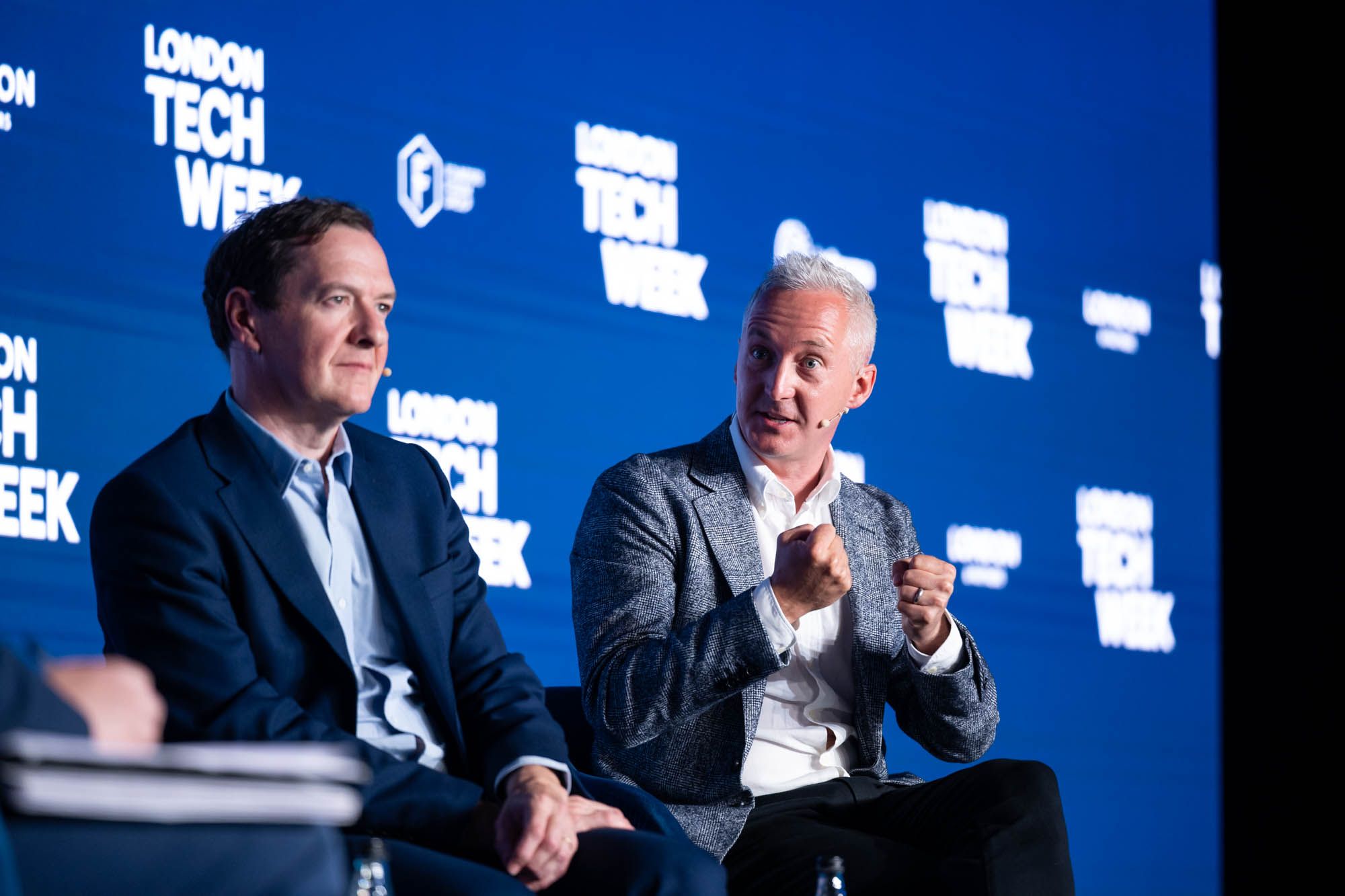
That question sat right at the centre of a panel I had the privilege of taking part in, titled "The Emerging Case for Sovereign AI Development in Europe". Moderated by Dan Milmo from The Guardian, alongside the Minister for AI, Kanishka Narayan MP, George Osborne of OpenAI, and Judith Dada of Visionaries, discussing the UK’s approach to Sovereign AI. There was a robust debate on stage, though there was one shared understanding: the decisions made in the next few years will fundamentally shape the UK's competitive position in the AI era.
Here are three key things I took away from the conversations this week:
1. Building a domestic AI ecosystem is not optional - it is a strategic imperative
The UK has been here before, and at the time we did not get it right. When cloud became mainstream, the UK adopted a cloud-first public sector policy which set the direction for many years. As a result, we are now deeply dependent on a small number of US cloud providers. And by not building any meaningful national capability alongside the adoption of this and other technologies, governments and users are left with very limited leverage when terms, pricing, or the geopolitical landscape change.
We cannot make the same mistake with AI.
AI is not just another productivity tool, it is becoming the operational intelligence layer of every organisation, government, and economy. If we outsource it entirely, consuming AI built and governed elsewhere, we’d be borrowing someone else's intelligence and ceding our competitive advantage. At the same time, sovereignty isn’t something that can just be bolted onto AI systems or applications after the fact. Control can’t be retrofitted; it needs to be part of the design.
So, what does getting this right actually look like?
It means actively backing domestic players, like with the £1.1 billion AI Hardware Plan announced this week to back British firms developing the chips and computing power behind AI. It means investing in the startups, researchers, and academics who are building in this space and creating real pathways for people to develop AI skills at every level, be it through government initiatives, like TechFirst, or in-house programmes. And it means ensuring that the models and applications being built here are trained on our data, governed by our laws, and reflect our values. This laudable intent by the Government is a positive step in the right direction.
2. The UK has phenomenal potential - but we have to move quickly
One of the things that struck me most at London Tech Week was how much has changed in just two years. Within this short period of time, the UK moved from ambition to deploying real national AI compute. Isambard AI, the national AI supercomputer built by HPE at the University of Bristol, went from inception to operational in record time, delivering real outcomes, like drug discovery, research breakthroughs, and startup innovation – and already it is oversubscribed.
That is a great example of what we can do when government and private sector have a shared vision and move with urgency. It is a fantastic blueprint for the new £750 million national AI supercomputer that was announced as part of the AI Hardware Plan this week. The sooner this system comes online, the more competitive we will be.
The UK has a lot going for it. As the Prime Minister pointed out in his keynote on Monday morning, we have attracted roughly half of all European tech investment this year, have world-class universities and researchers, and we have got a sophisticated financial ecosystem with a long track record of backing ambitious ideas.
Our country has unique national data assets, such as the NHS health records, which represents one of the most significant repositories of health data in the world. We have the talent, the research-base and the start-up community. These are not small advantages.
However, potential does not mean much if we do not act on it. The countries that are moving fastest on AI infrastructure, on sovereign compute, on AI application development, will be the ones that attract and retain the talent, the capital, and the startups that define the next era of economic growth. We have got to move with urgency.

3. We cannot outspend big tech - so we need to build for choice, not dependency
Another reality we have to accept is that the US has a scale advantage in AI that we simply cannot match pound for pound. The major US model builders and cloud providers are investing at a level no national government budget can replicate.
So, the question is not whether we can build a model that out-performs the best US alternatives. The question is how we can build the right foundations so that our economy retains genuine capability and choice, rather than ending up solely dependent on what others build for us.
To ensure those foundations, we need to start by removing the barriers that are slowing us down. The Government is actively working to adjust the planning laws and processes that have delayed the construction of AI-ready data centres, creating AI Growth Zones and establishing expert teams to streamline and accelerate projects. And there are some exciting examples of what is possible: Old industrial sites across the country being repurposed for AI infrastructure, like the former soap factory in Warrington the Prime Minister referenced, or the old steelworks in Newport, Wales. These are the kinds of moves we need to be making at pace and at scale.
Second, energy costs and energy availability must be treated as a national priority, as compute cost is directly linked to energy cost.
And third, domestic companies need access to the capital and the regulatory clarity to build and scale here rather than elsewhere.
The UK also needs to be deliberate about which parts of the AI stack we own, control, or have strong influence over. In its AI Hardware Plan, the Government has identified an opportunity to foster developing players in the AI chips sector on our shores. A bold move focused on some promising UK companies that I hope succeeds. It will be interesting to see what other parts of the AI stack it seeks to nurture in future.
Partnership is necessary and can be genuinely valuable, provided it is structured as sovereignty-by-design, not outsourced dependence. The work HPE is doing in partnership with the UK Government and UK institutions is a great example of what that partnership should look like: building genuine sovereign AI systems on UK soil, where data, operations, and decision rights stay in UK hands, governed by UK law, and aligned to UK national interests—so capability can scale domestically without ceding strategic control of the AI stack.
When you are completely dependent, you are operating on someone else's terms and conditions, subject to their political views, their geopolitical priorities. The UK has to make sure we are building enough of a foundation that we always have choice, not just dependency.
Sovereign AI is becoming reality
Sovereign AI is no longer theoretical: The infrastructure is being built, models are being trained, and the economic value is beginning to flow. The decisions about where that infrastructure sits, who governs it, and whose interests it serves are being made now. This could shape the UK’s prosperity for decades. We cannot afford to make the same mistakes we made with cloud.
The good news is that the UK already has everything it needs – the talent, academia, capital and national assets – to turn that potential into reality and secure its place as a global leader in AI. What it needs now is execution.